From quality data
to defensible
decisions.
VIQMS brings GMP events, laboratory records, and quality-system data into a controlled quality-intelligence workflow—so teams can assess risk, prepare grounded documentation, and retain clear human accountability.
Quality intelligence that remains explainable
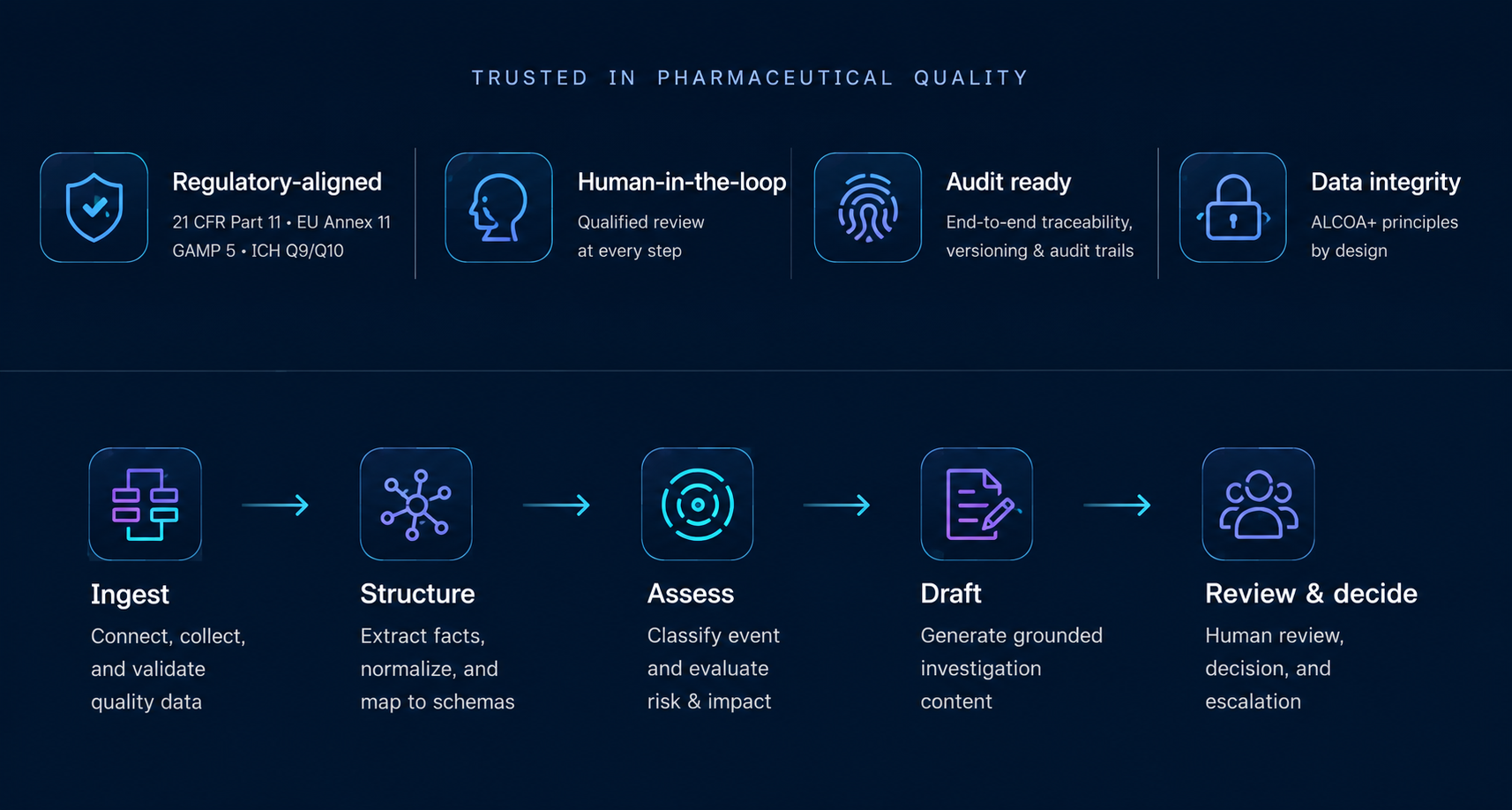
Pharmaceutical quality teams work across complex narratives, records, procedures, and regulatory expectations. Vizir Analytical designs controlled systems that turn this information into structured, reviewable, and defensible decision support.
Quality-event intelligence
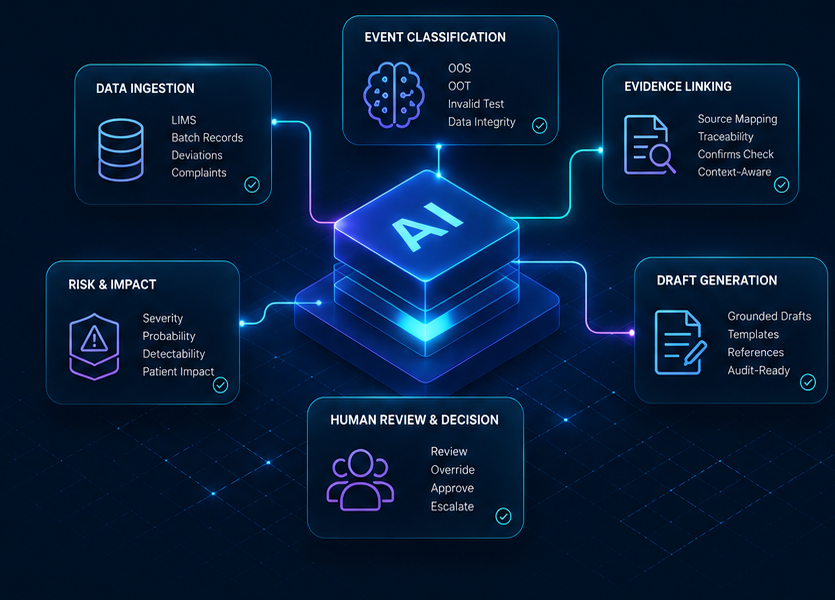
Transform incoming quality narratives—from deviations and laboratory events to batch-record observations—into defined workflows with consistent categorization and clear escalation paths.
Evidence-linked analysis
Connect findings to source records and quality-system evidence, helping reviewers distinguish what is stated, supported, uncertain, or still requires investigation.
Human accountability
Use confidence gates, contradiction checks, and reviewer controls so that qualified personnel retain ownership of conclusions and final quality decisions.
Focused tools for high-consequence quality work
GMP/QMS event assessment
Support consistent triage and structured assessment of OOS, OOT, invalid-test, investigation, and data-integrity events while preserving reviewer control at each meaningful decision point.
Designed for systems that must withstand review
- Risk-proportionate governance. Controls reflect potential impact to patient safety, product quality, data integrity, and regulatory compliance.
- Source-grounded operation. Outputs are designed to remain connected to the underlying record, evidence, and relevant context.
- Transparent limitations. Uncertainty, boundary cases, and model limitations are surfaced for review rather than hidden behind automated confidence.
- Lifecycle oversight. Versioning, evaluation, monitoring, and controlled change are treated as continuing responsibilities, not one-time deployment tasks.
Bring more structure to your quality decisions
Request a demonstration or consultation to discuss where controlled, evidence-linked quality intelligence can support your team.
Contact us